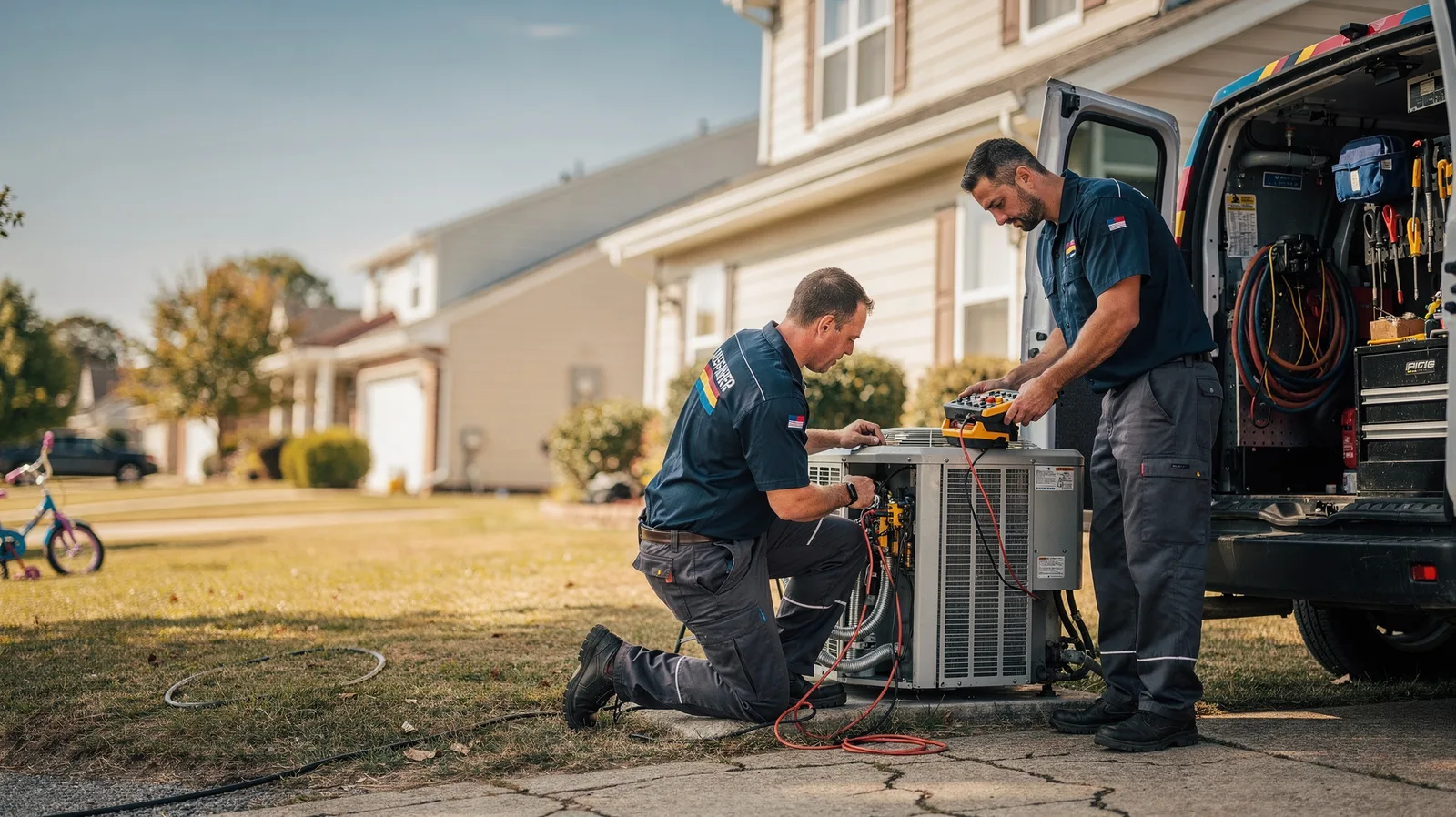
Refrigerant leak repair in Port Charlotte means finding the leak, fixing it and proving the fix held. Topping off a leaking system every summer is money spent on refrigerant that ends up in the air.
An AC is a sealed system. If it is low, it has a leak. The usual spots here are the outdoor coil, where salt and moisture eat pinholes in the copper tubes, the evaporator coil inside, the Schrader valve cores on the service ports and brazed joints that have cracked from vibration.
We start with an electronic leak detector, then check the suspect spots with bubble solution. For hard-to-find leaks we isolate sections and pressure test with dry nitrogen, sometimes letting it sit to watch for a drop.
What happens next depends on where the leak is. A leaking valve core is a small fix. A cracked braze joint can be repaired. A coil riddled with formicary corrosion, the tiny tunnel pitting common in Florida evaporator coils, usually needs replacement, because patching one pinhole leaves ten more behind it.
After the repair we pull a deep vacuum measured with a micron gauge and charge by weight or by superheat and subcooling to the manufacturer's spec. Older R-22 systems are their own story. R-22 is costly now, and a large leak on an R-22 unit is often the point to price an AC replacement alongside the refrigerant leak repair.